A founder describes the company's initial funding as “my own savings.” To them, the explanation is straightforward: they know the work they did, the income they received and how long they saved. The person reviewing the application may see only a recent account balance and a proposed transfer.
The task is to make that history visible.
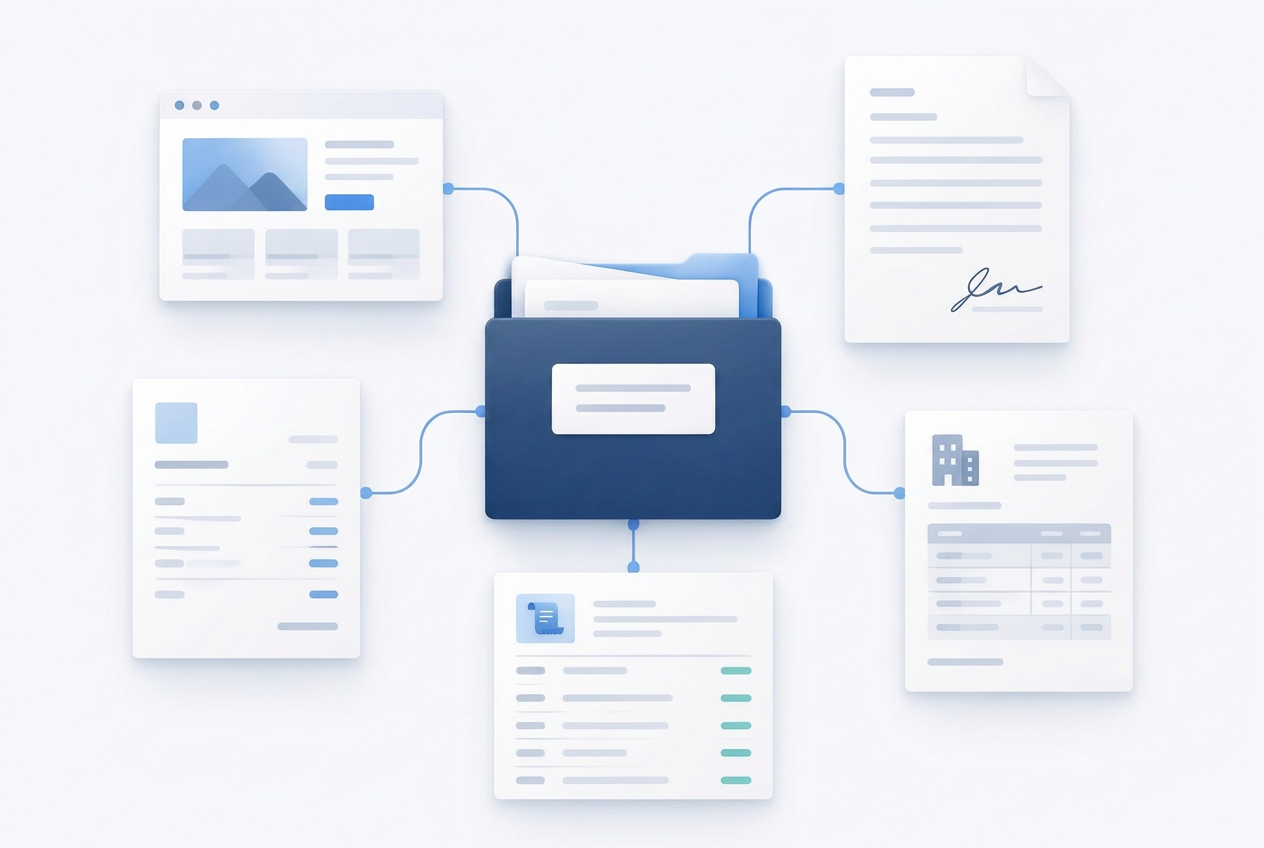
Source of funds explains how the specific money under review was generated. Source of wealth explains how a person or company accumulated their overall wealth. A useful response connects that explanation to records the reviewer can follow. [1][5]
For a corporate service provider or onboarding team, this means deciding whose funds the bank or electronic money institution (EMI) is asking about, identifying how the money was earned or received, and showing its route into the company. Start with the explanation, then select the documents that support it.
The examples below are illustrative. The evidence needed depends on the provider, jurisdiction and circumstances.
Source of funds vs source of wealth: the difference
These two questions are easy to confuse: both ask where your money came from. I suggest starting with the story each question asks you to tell.
Source of Funds — the story of specific money
The main question is: “How did you obtain these particular funds?”
Who paid you, when, and why? Did you earn the money through work, receive dividends, sell a property or take out a loan? How did it then reach the account you will use to fund the company?
This is where amounts, dates and documents connect the events. For example, you sold a property, received the payment into your personal account and are now putting part of the proceeds into the company. The sale agreement, receipt of payment and subsequent transfer show that story step by step. [1][2]
Source of Wealth — the bigger picture of why you have money
The main question is: “How did you build your wealth?”
Perhaps your grandfather left you an inheritance. Perhaps you gained an education, learned to solve a difficult problem and started earning from it through employment, consulting or your own business.
Here, you describe the work, activities and events that helped you accumulate wealth. Your skills and professional experience help explain the story; income, transactions and other receipts connect it to the money.
For example, you spent ten years growing a company, receiving dividends and investing part of that income in property. This explains how you built your wealth. Selling one of those properties explains the origin of the particular funds you are now transferring. [1][4]
| Question | Source of funds (SoF) | Source of wealth (SoW) |
|---|---|---|
| What does it explain? | The origin of the specific money under review | How overall wealth was accumulated |
| What might the answer cover? | Customer revenue, a loan, dividends or proceeds from an asset sale | A professional career, business ownership, investments or inheritance |
| Illustrative example | €80,000 from the sale of an investment portfolio, intended as a shareholder loan | Wealth accumulated through employment income and investment returns over 15 years |
| What should the evidence establish? | The underlying event or activity and the relevant receipt and transfer | A credible account of the main wealth-generating activities and milestones |
Both explanations can belong in the same application. Be clear about which question each document answers.
Why do banks ask for source of funds?
Source-of-funds enquiries help a provider assess whether the money fits what it knows about the customer and their activities. The depth of the enquiry, and whether an explanation needs further verification, depends on risk and applicable obligations. [2]
Read a short request such as “please provide source of funds” from the reviewer's position. Which part of the funding story can they already establish, and which part is still unclear?
For a corporate application, begin by identifying what the request concerns:
- the company's initial funding;
- a particular payment or existing balance;
- the ongoing revenue expected through the account;
- the wealth of an owner or another person supplying funds.
If the wording leaves that open, ask a precise question: “Does this request concern the proposed €80,000 shareholder loan, the company's trading receipts, or the shareholder's wider wealth?” This gives the provider a concrete scope to confirm before the team asks the client for more records.
Keep the response within the wider corporate account opening document package. The funding explanation should use the same company names, business description and ownership information as the application.
How to explain personal savings and accumulated wealth
“Personal savings” tells the reviewer that money was put aside. The next question is what income or other receipts made those savings possible.
Prepare a short chronology of the relevant work or business activity, the period of earnings and the funds accumulated. Describe specialist work in terms someone outside that industry can understand. If the balance combines salary, freelance income and dividends, identify those sources separately.
For example, an illustrative explanation might read:
Use wording like this only where the records support it. An employment agreement can establish the role and agreed pay; the remaining evidence needs to address earnings received and savings available.
Professional skills and experience can make the earnings understandable. A CV may help with that background where relevant or requested. It does not establish how much income was received or retained. Possible supporting records include payslips, employer confirmation, tax records and account history. [3]
For source of wealth, give the main activities and milestones that explain the person's financial position. The aim is a reasoned account of how their wealth arose, with appropriate support; it need not become an inventory explaining every asset. [4]
Company funding: distinguish the business, its owners and the actual funder
A company's wealth may come from its own commercial activities. External financing introduces another question: where did the person or entity providing the money obtain it? The relevant enquiry depends on the funding arrangement and applicable risk assessment. [5]
Consider a newly incorporated design studio. It expects to earn client revenue after launch, while its founder will pay the initial costs through a shareholder loan. Those are two different parts of the explanation: what funds the business now and what is expected to fund it later. A forecast cannot establish that future revenue has already been earned.
A shareholder loan or capital contribution explains the arrangement through which the company receives money. Where the provider asks about the contributor's underlying source, continue the explanation to the relevant earnings, sale, investment or other origin. [5]
Identify the actual funder. A minority investor, parent company or another lender may supply money even where someone else is identified as the UBO. Ownership and funding should each be explained on their own facts. [5]
Use an ownership structure chart to explain ownership and control. Add a separate funding explanation where money moves differently from the ownership chain.
What documents can prove source of funds?
Before adding an attachment, complete this sentence: “This document shows…” If its purpose is unclear, identify the fact you need to establish first.
The following source-of-funds examples show possible evidence for different origins. Select what addresses the actual request and follow the provider's document conditions.
- Executed loan agreement and payment records
- underlying lender-source information where appropriate [7]
A contract records an agreement. An invoice records an amount billed. A matching statement can show payment. In the response, connect the relevant details: identify the service, the invoice and the corresponding credit. The reviewer can then follow the transaction without having to work out how the attachments relate to one another.
For trading income, the supporting commercial explanation belongs alongside the proof of business activity. Keep the two consistent without duplicating the entire business description in the source-of-funds response.
Read the bank statement from the reviewer's side
A bank statement can answer the source-of-funds question when its entries establish the relevant source. It can also show only where the money was held or the account from which it was last transferred. Examine what the statement establishes before deciding what else is needed. [8]
Imagine opening the file without knowing the client. A credit from an unfamiliar company appears beside the description “personal savings.” The client may know exactly what the payment was for. The reviewer needs that connection explained.
For each relevant entry, identify the payer, their relationship to the applicant, the payment's purpose and its supporting record. Where the payer's name differs from the name in an agreement, explain the relationship and support it with the relevant records.
Illustrative scenario: the application describes a deposit as customer revenue, but the payer is a shareholder's other company. Establish whether the transfer paid for services, advanced a loan or reimbursed an expense. If the original description was wrong, correct it explicitly and provide the evidence for the actual arrangement.
An unexplained payment can leave a gap in the assessment, particularly where it appears inconsistent with the customer's known circumstances. A further question gives the applicant an opportunity to clarify it; the question alone does not predict the decision. [2]
Check the figures too. If fees, tax, currency conversion or a partial transfer explain a difference, show the calculation and supporting record. A short explanation beside the relevant entry is easier to assess than an unexplained mismatch across files.
Source-of-funds checks: how far back should the evidence go?
There is no single lookback period that answers every source-of-funds enquiry. The extent of the enquiry depends on the circumstances and risk. [4]
Distinguish the statement period requested from the history needed to explain the money. In an illustrative case, a founder sold a property five years ago and kept part of the proceeds in savings. Three recent statements might show the balance throughout that period. The sale and receipt records would address how it originally arose.
Provider instructions still matter. One published onboarding guide requests three months of company statements. Where no company account exists, it asks for personal statements showing business-related transactions, extending the period to six months if none appear in the last three. Those are that provider's instructions for specified circumstances. [9]
Start with the requested period. If the origin predates it, identify the earlier event and the records that connect it to the current funds. Ask the provider whether that evidence addresses the gap.
What if a requested document is unavailable?
Give the reviewer a clear account of the gap: which document is unavailable, why, and what you can provide instead. Identify the fact the replacement would need to establish, such as ownership, earnings or receipt of proceeds.
For example:
Australian regulatory guidance includes accountant or lawyer confirmation and, in some circumstances where other evidence is unavailable, formal declarations among possible verification materials. Whether an alternative is suitable depends on the case and the provider's assessment. [2]
Sometimes the requested document does not apply to the transaction. If an invoice is requested for a loan payment, explain the loan arrangement and point to the agreement. Check whether the provider understood the transfer differently.
Keep the point open until it is resolved. Record which facts are supported and which still depend on the client's explanation.
How to respond to a source-of-funds RFI
The response should let the reviewer follow the money from its origin to its intended use. Use the provider's question order, then place the relevant evidence beside each answer.
Define the scope. Identify the applicant, funder, amount, currency and transaction or balance under review.
Explain the economic origin. State the activity or event that generated the money and when it occurred.
Describe the relevant movement. Identify the accounts, entities and financing arrangement needed to connect that origin to the applicant.
Map claims to files. Give document names and useful page or transaction references. Explain any material differences in dates, names or amounts.
Resolve contradictions before sending. Check the response against the application, ownership records, financial information and previous answers. State what remains unavailable or subject to clarification.
Check that the documents support the explanation as a whole. A thematic review of solicitors' files in England and Wales found cases where explanations received insufficient scrutiny and evidence did not support the funds received. That finding illustrates why collecting documents and assessing them are separate tasks. [10]
Example: explaining an investment-funded shareholder loan
Here is a fictional example of how the explanation and attachment references can work together:
The response gives the reviewer an origin, a route, an amount and a clear distinction between completed and planned events. If source of wealth is also requested, add the supported history of how the investment portfolio was built.
Frequently asked questions
Is proof of funds the same as proof of source of funds?
No. Proof of funds shows that money is available. Proof of source of funds explains how you obtained it.
For example, a balance confirmation might show €80,000 in your account without explaining whether it came from salary savings, an inheritance or a loan. The source-of-funds explanation connects that amount to the event or activity that generated it. [4]
Is a source-of-funds letter enough?
A letter helps the reviewer follow your explanation. Whether it is sufficient depends on what the provider needs to verify.
Use it to connect the story to the documents:
“These funds came from a property sale. Attachment 1 records the sale; Attachment 2 shows the payment into my account.”
If the provider has requested supporting records, include them or explain why they are unavailable. A signed letter does not automatically replace those records. [8]
How long does a source-of-funds check take?
The bank or EMI handling your application is the right place to ask for a timeframe. There is no single deadline that applies to every review.
Make your follow-up specific:
“Have you received everything needed for the source-of-funds review? Are any questions still awaiting our response, and when should we expect an update?”
This helps you establish whether you need to provide anything further and what timeline the provider expects.
Keep the explanation connected to the onboarding file
Before submitting, read the response as someone who has never spoken to the client. Can you tell how the money arose, why it belongs to the funder and how it reaches the company? Can you find the supporting records for each part?
Keep that explanation with the evidence and outstanding questions. If the amount, funder or financing arrangement changes, update the case before reusing an earlier answer.
About the author
Alexander Blinov is the founder of OnboardOS. His experience spans corporate legal services, KYC/AML and onboarding international companies with banks and EMIs. He is developing OnboardOS to help corporate service providers gather client information, identify evidence gaps and prepare coherent account-opening submissions.
Designed to organise client information, corporate documents, compliance gaps and submission preparation within a structured corporate onboarding workflow.
Sources and further reading
The sources below have different jurisdictions and audiences. Regulatory and supervisory guidance supports the underlying distinctions; provider pages illustrate particular document requests. None establishes a universal acceptance checklist.
- [1]↩ FCA — Financial Crime Guide, chapter 3. UK financial-services guidance; source-of-funds and source-of-wealth definitions.
- [2]↩ AUSTRAC — Source of funds and source of wealth. Australian regulatory guidance on collection, verification, risk and possible evidence.
- [3]↩ AUSTRAC — Proof of source of funds and source of wealth. Public-facing explanation and examples of supporting records.
- [4]↩ HMRC — Source of Funds & Source of Wealth, AMLG11630. Guidance for HMRC-supervised businesses on economic origin, wealth and proportionate enquiries.
- [5]↩ FIAU Malta — Guidance on source of wealth and funding from third parties. Corporate wealth, external financing and the actual funder.
- [6]↩ EXANTE — Corporate client supporting documents to establish source of funds and source of wealth. Provider-specific examples for business income and dividends.
- [7]↩ Legal Sector Affinity Group — Anti-Money Laundering Guidance, section 6.17. UK legal-sector guidance, including loans and third-party funding.
- [8]↩ SRA — Anti-money laundering questions and answers. Practical guidance for solicitors on statements, explanations and evidence.
- [9]↩ Sokin — Source of Funds / Source of Wealth. An example of provider-specific statement periods and alternatives.
- [10]↩ SRA — Thematic review of source of funds and wealth compliance. Findings on scrutiny, consistency and documentary support in legal-sector files.
Related resources

Corporate Bank Account Opening Documents: The Complete Checklist
Read article
Ownership Structure Chart for Bank and EMI Onboarding: What to Include and How to Document It
Read article